Rhinoplasty Los Angeles, CA: Natural Nose Reshaping That Looks Like You
Your nose is the centerpiece of your profile. It shapes how your eyes, lips, and chin read in every photo and every conversation. If you’re searching for a plastic surgeon in Los Angeles, CA who understands that a great nose should balance your face rather than replace it, you’re in the right place.
At Ran Plastic Surgery, Dr. Cong Ivy Ran, a fellowship-trained facial plastic surgeon specializing in eye and nose surgery, performs rhinoplasty surgery in Los Angeles, CA with one goal: a refined, proportionate result that looks like a refreshed version of you, not a template.

What Is Rhinoplasty?
Rhinoplasty, often called a “nose job,” is surgery that reshapes the nose to improve its appearance, function, or both. It is widely considered one of the most technically demanding procedures in facial plastic surgery, because changes are measured in millimeters and every adjustment affects the surrounding features.
Depending on your goals, nose reshaping in Los Angeles, CA may address:
- A bump or uneven contour on the nasal bridge
- A wide, bulbous, or drooping nasal tip
- A low or flat bridge
- Nostril width or shape
- Asymmetry or a crooked appearance
- Breathing problems linked to a deviated septum
- Results from a previous nose surgery that need refinement
Rhinoplasty vs. Nose Tip Plasty: Which Is Right for You?
Not every nose needs a full overhaul. Part of an honest consultation is figuring out how little needs to change.
Full rhinoplasty reshapes the bridge, tip, and overall structure. It suits patients who want to change the bridge, refine overall proportions, or correct both appearance and breathing.
Nose tip plasty refines only the tip: its shape, projection, width, or rotation. If your main concern is a broad, rounded, or uneven tip, this more targeted option may be all you need. It reshapes the tip without altering the whole nose.
If your nose looks different from each side, tip asymmetry is one of the most common reasons. Read why your nose can look different from both sides to learn what’s normal and what can be corrected.
Types of Rhinoplasty: We Offer in Los Angeles, CA
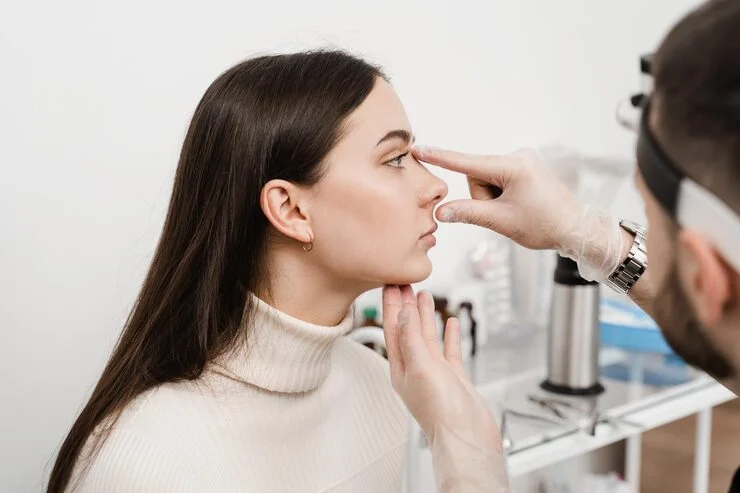
No two noses, or goals, are alike. Depending on your anatomy and what you want to change, your plan may fall into one of the categories below, and many patients combine more than one.
Ethnic Rhinoplasty in Los Angeles, CA
Ethnic rhinoplasty reshapes the nose while respecting the structural traits and proportions of your ethnic background. It is not about “Westernizing” a nose. Los Angeles is one of the most diverse cities in the world, and a one-size-fits-all technique rarely looks right on every face.
Nasal anatomy varies meaningfully across backgrounds, including skin thickness, cartilage strength, bridge height, tip shape, and nostril width. Treating these differences as something to erase often leads to results that look out of place. A thoughtful approach treats them as part of your natural character.
Asian rhinoplasty is a major focus at Ran Plastic Surgery. Many Asian patients have:
- A lower or flatter nasal bridge
- Less tip projection
- A softer, broader, or rounder nasal tip
- Thicker skin, which can affect how much definition a tip can show
- Flatter midface contours
For these patients, Dr. Ran focuses on:
- Bridge refinement that adds subtle height without creating a bridge that looks too high or too straight for the eyes and chin
- Tip definition that improves shape and projection while keeping a soft, natural look
- Proportion between the nose, eyes, lips, and chin
- Identity preservation, so you look like a refreshed version of yourself
Dr. Ran combines Eastern and Western aesthetic principles when planning facial surgery. She approaches ethnic rhinoplasty for patients of other backgrounds with the same principle: working with your anatomy rather than against it.
Functional Rhinoplasty and Septoplasty in Los Angeles, CA
Functional rhinoplasty focuses on how your nose works, not only how it looks. If you’ve struggled with nasal obstruction or noisy, restricted breathing, the cause may be structural, and the nose can often be corrected while improving appearance at the same time.
Common structural causes of breathing difficulty include:
- A deviated septum: the wall of cartilage and bone dividing your nostrils sits off-center and narrows one airway
- Narrow or collapsing nasal valves: the narrowest part of the airway can weaken or collapse with breathing
- Enlarged turbinates: structures inside the nose that can swell and restrict airflow
- Past injury: an old sports injury or fall that shifted the bones or cartilage
Functional rhinoplasty may include:
- Septoplasty to straighten the septum and open the airway
- Cartilage grafting to support or reinforce a weak or collapsing area
- Nasal valve repair to widen the narrowest part of the airway
- Combined cosmetic and functional surgery (sometimes called septorhinoplasty) to improve both breathing and appearance in a single procedure
Signs you may benefit from a functional evaluation include trouble breathing through one or both nostrils, chronic congestion that doesn’t improve, snoring or mouth breathing, or breathing that worsened after an injury or earlier surgery.
Insurance may cover part of the functional portion when there is a documented medical need. Cosmetic reshaping is typically not covered. Confirm your coverage with your insurer, since it depends on your policy and individual evaluation.
Revision Rhinoplasty in Los Angeles, CA
Revision rhinoplasty (also called secondary rhinoplasty) is surgery to correct or refine the result of a previous nose procedure, whether it was done by Dr. Ran’s team or elsewhere. It is widely considered more complex than a first-time rhinoplasty, because scar tissue, altered anatomy, and sometimes missing cartilage all have to be taken into account.
Patients seek revision rhinoplasty for reasons such as:
- Results that don’t match what was discussed: a nose that looks too small, too sharp, too upturned, or too “done”
- Asymmetry or irregularities that appeared as swelling settled
- Breathing problems that started or worsened after surgery
- Over-reduction or collapse, where too much structure was removed
- A bridge that is too high or too flat compared with the rest of the face
- A tip that no longer suits the eyes, lips, or chin
A revision consultation typically includes a review of your original goals and, if available, your surgical history and operative records. It also includes a careful exam of what remains structurally and a candid discussion of what is realistic. Because the nose is already healing from surgery, timing matters: most surgeons advise waiting for swelling to fully settle, which can take up to a year, before planning a revision, unless there is a functional concern.
An honest consultation also means hearing “wait” or “this is within the range of normal healing” when that’s the right answer. If you’re unsure whether your result needs revision, a professional evaluation is more reliable than mirror and selfie angles, which can distort perceived symmetry.

A Whole-Face Approach to Nose Reshaping in Los Angeles
A nose never exists in isolation. A recessed chin can make a normal nose look larger. A low bridge can change how far apart the eyes appear. Heavy eyelids can change how balanced the middle of the face looks.
That’s why Dr. Ran evaluates your face from the front, side, and below before recommending anything. She looks at your forehead, bridge, tip, lips, and chin together. For a deeper look at this philosophy, see how the nose relates to the eyes and chin.
What to Expect at Your Rhinoplasty Consultation
- A conversation about your goals. What bothers you most, and what do you want to keep?
- A full-face assessment from multiple angles, not just your nose.
- Profile analysis of the forehead, bridge, tip, lips, and chin together.
- A functional evaluation. Breathing and internal structure matter as much as appearance.
- Photos and imaging to discuss what’s realistic.
- A tailored surgical plan, including what is best left alone.
Can’t come in right away? Virtual assessments are available.
Choosing the Right Plastic Surgeon in Los Angeles, CA
Los Angeles has one of the highest concentrations of plastic surgeons in the country, which makes research essential. Before you book, we encourage you to:
- Verify credentials independently through the American Academy of Facial Plastic and Reconstructive Surgery and the Medical Board of California
- Ask about experience with your specific procedure and facial anatomy, whether that’s primary, ethnic, functional, or revision rhinoplasty
- Review full before-and-after galleries, not just highlights
- Confirm the surgery takes place in an accredited facility
Our guides on how to choose the right plastic surgeon and board-certified vs. board-eligible plastic surgeons walk you through exactly what to ask.
Thinking About Eyes and Nose Together?
Many patients considering plastic surgery in Los Angeles, CA are also bothered by heavy or tired-looking eyelids. Since the eyes and nose shape each other’s appearance, it often helps to plan them together. Learn more about ptosis vs. excess eyelid skin and whether eyelid surgery can change your vision.
Rhinoplasty Recovery: What Patients Typically Experience
- Weeks 1–2: Swelling and bruising are most noticeable, then begin to fade.
- Weeks 3–4: Most visible healing is complete.
- Up to 12 months: Final refinement, especially in the nasal tip, continues to settle.
Everyone heals differently, and Dr. Ran will walk you through a timeline and aftercare plan specific to your procedure.

FAQs: Rhinoplasty in Los Angeles, CA
Cost depends on the complexity of your procedure, whether it involves the tip only or the whole nose, whether it is a primary or revision surgery, and facility and anesthesia fees. Los Angeles pricing tends to run higher than national averages. A personalized consultation is the only way to get an accurate quote.
Rhinoplasty can reshape the entire nose, including the bridge, tip, and nostrils. Nose tip plasty targets only the tip. It’s a more focused option for patients whose main concern is tip shape, width, or projection.
Ethnic rhinoplasty reshapes the nose while respecting the structural traits and proportions of your background. The aim is a natural, balanced result that fits your face, not a generic template.
Yes, with the right approach. Many Asian patients benefit from subtle bridge and tip refinement instead of a Western template, so the result stays proportionate to the eyes and chin.
It shouldn’t. A well-planned ethnic rhinoplasty refines your nose while keeping the features that make your face recognizably yours.
Functional rhinoplasty improves how the nose works, addressing problems such as a deviated septum, nasal valve collapse, or enlarged turbinates. It can be performed on its own or combined with cosmetic changes.
No. Septoplasty straightens the septum inside the nose to improve airflow and doesn’t change the outside shape on its own. Rhinoplasty reshapes the external nose. They’re often performed together, which is called septorhinoplasty.
If a deviated septum or other structural issue is affecting your breathing, it can often be addressed alongside cosmetic reshaping. Insurance may cover the functional portion in some cases. Confirm coverage with your insurer.
It’s a second (or later) nose surgery to correct or refine a previous result, whether the concern is appearance, breathing, or both.
Most surgeons recommend waiting until swelling has fully settled, which can take up to a year, unless there is a functional problem that needs earlier attention. Your surgeon can advise based on your healing.
In many cases, yes, depending on the structure that remains. A consultation and exam are needed to determine what’s realistic.
A well-planned rhinoplasty shouldn’t. The aim is a subtle, balanced improvement that suits your features and preserves your identity.
In many cases, yes. Correction may involve septoplasty, cartilage grafting, and careful sculpting of the bone and tip. The goal is balance, not perfect mirror-image symmetry, which doesn’t exist in any face. For background on why asymmetry is normal, the Cleveland Clinic’s overview of facial asymmetry is a helpful outside resource.
Most swelling and bruising settle within 1–2 weeks, with most visible healing complete by 3–4 weeks. Final tip refinement can take up to a year.
Some patients do. Whether it’s appropriate depends on your anatomy, goals, and health, so it’s best discussed in consultation.
Verify credentials, review full portfolios with patients who have similar anatomy to yours, and look for a surgeon who explains risks as clearly as benefits.
Ready to Talk About Your Rhinoplasty in Los Angeles?
The best first step is a conversation about how your nose fits with the rest of your face. Meet with Dr. Cong Ivy Ran for a personalized, no-pressure consultation in Los Angeles, in person or virtually, whether you’re considering a first-time, ethnic, functional, or revision rhinoplasty.
Ran Plastic Surgery | 11600 Wilshire Blvd, Ste 324, Los Angeles, CA 90025
Individual results are not guaranteed and may vary from person to person. This page is for general education and does not replace an in-person medical evaluation.
Specialized facial aesthetics by Dr. Cong Ivy Ran — delivering subtle, balanced results tailored to your unique facial structure.

Schedule Free Consultation
*Individual results are not guaranteed and may vary from person to person. Images may contain models.
© Copyright 2026 Ran Plastic Surgery. Powered By Target Patients MD